
This site is no longer active!
If you are the owner, you must reactive this site for it to be published again
or contact us at support@rebolthq.com

If you are the owner, you must reactive this site for it to be published again
A leaning or bowing retaining wall isn't just an eyesore - it's a sign that something is failing underneath. Wood walls especially have a lifespan, and once they start to go, they go fast. Water gets behind them, the soil shifts, and before long you've got a wall that's doing the opposite of its job.
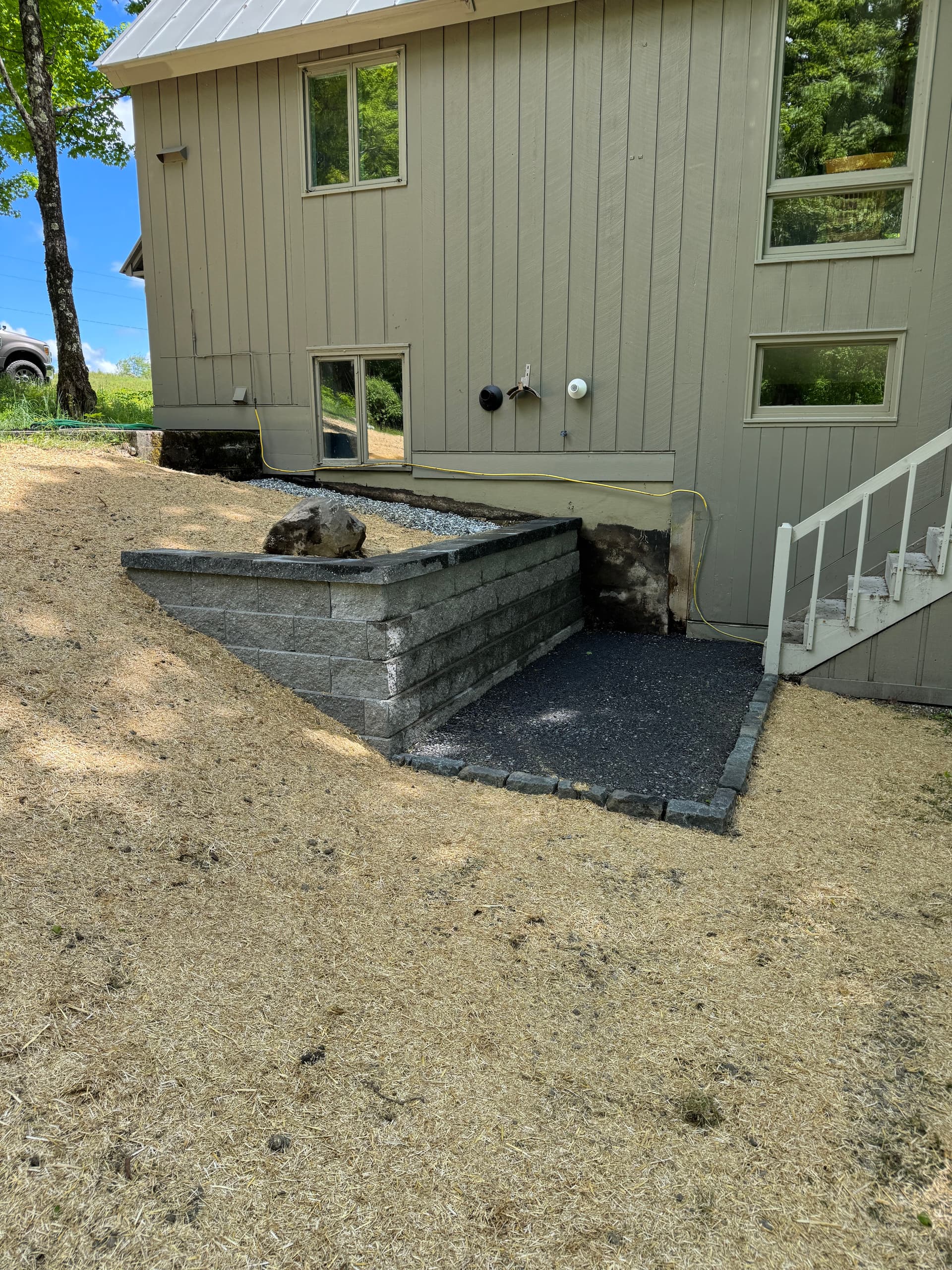
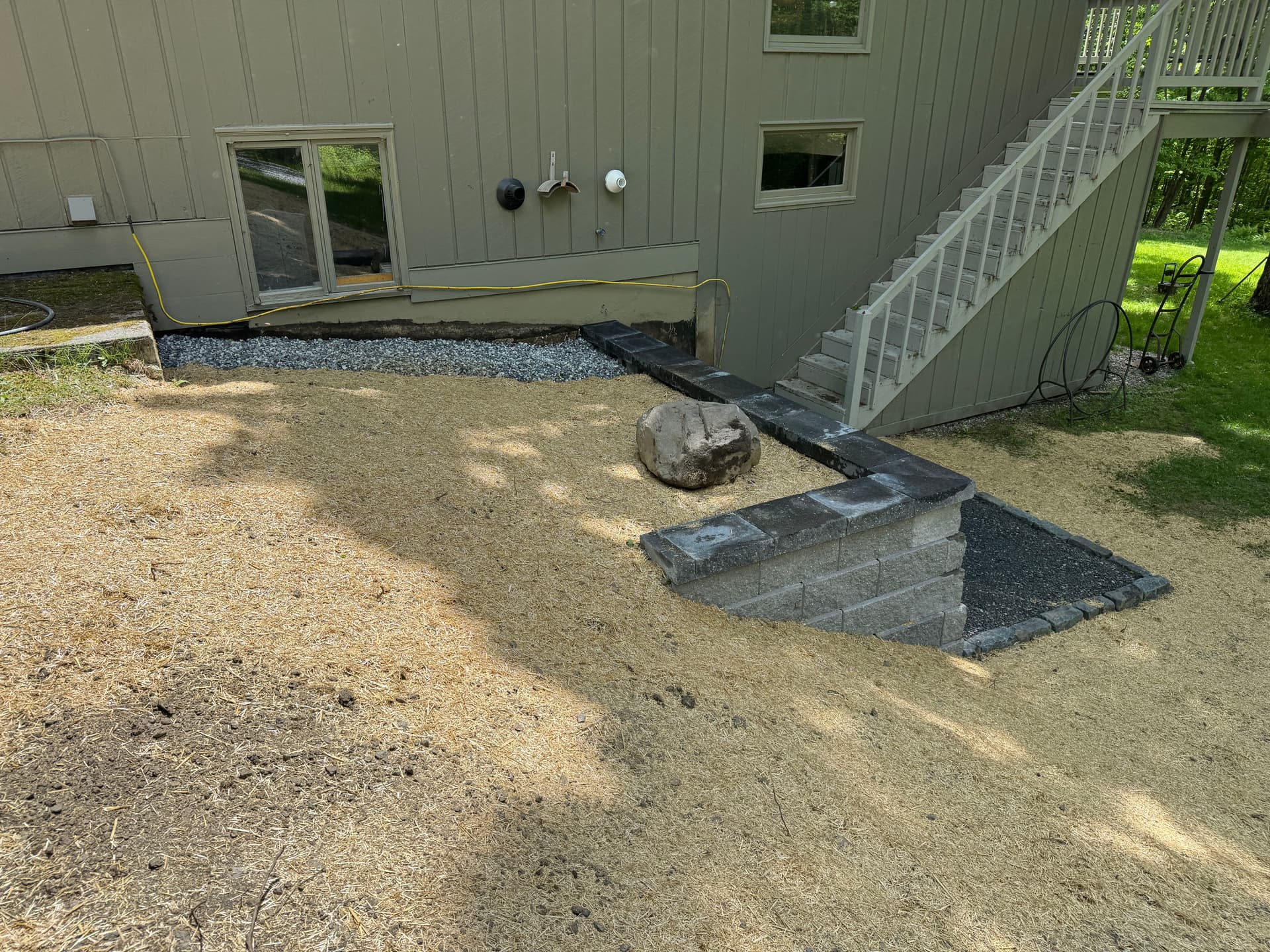
Here's what we were working with: a hillside right up against the house with a wood wall that had run its course. The fix wasn't just swapping one wall for another. We tore out the old material, regraded the area, and built a new engineered block wall designed to actually handle the pressure of the hillside behind it. Then we installed a french drain to give that water somewhere to go instead of building up against the structure.
That drainage piece is huge. A lot of retaining walls fail not because of the wall itself, but because nobody addressed the water. Hydrostatic pressure builds up behind a wall over time and eventually wins. The french drain pulls that water away before it ever becomes a problem. You can see the gravel bed running along the base of the house - that's the drainage system doing its job.
The finished wall also ties into a crusher run pad bordered by matching block edging near the stair base. Clean, functional, and built to hold up through freeze-thaw cycles and heavy rain without shifting. That's the difference between a hardscaping job done right and one that just kicks the problem down the road a few years.
If your retaining wall is starting to show signs of movement - leaning, cracking, or bulging - it's worth having someone take a look before it becomes a bigger problem. Proper drainage and quality materials from the start is always cheaper than dealing with the damage a failed wall leaves behind.